Officials have said the national capital lacked a convention centre big enough to seat so many MPs and adhere to social distancing norms. Additionally, holding a 'virtual session' looks slims as any change in the rules requires a motion to be carried in both the Houses of Parliament.

About 300 employees would come under the ambit of voluntary decision.

The incremental stress is mainly from sectors including power, infrastructure, constructions, hospitality, iron and steel, telecom, and realty.

Scores of employees took to social media to express disappointment and said they were asked to resign over WhatsApp calls. On Twitter, some said they had been asked to resign by May 31 and that there was no severance package and salary would be paid only for May.

'The spirit of cooperation between the Centre and states has been diluted in many ways.' 'The level of consultation which used to be there earlier has reduced significantly.'
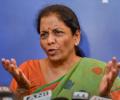
The government was going in the "wrong direction" and it was "highly condemnable" that it did not discuss the proposed changes with trade unions and other stakeholders, says BMS, trade union arm of the RSS.
During his interaction with the chief ministers, Prime Minister Narendra Modi assured that more economic activities would resume; he also said that zone identification may be left to the states.

Diamond industry expects revenues to drop by 20-25% in the current financial year.

CII said working capital limit enhancement should be accompanied by relaxing norms related to collaterals.

The Centre and state governments are struggling to restart at least some industrial activity as it becomes apparent that the 21-day nationwide lockdown imposed to check the spread of coronavirus disease (Covid-19) could be extended beyond April 14, and stocks of essential commodities need replenishing across the country. State governments, particularly those like Delhi that witnessed an exodus of migrant workers after the lockdown was announced, say there are not enough labourers in the city to work in factories and warehouses.
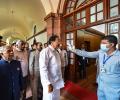
Many feel that the money from their MPLADS should go directly to a district hospital in their respective constituencies rather than a central fund like PM CARES. Archis Mohan reports.

Bureaucratic insensitivity gave way to compassion with the state administration, police and passersby joining forces to help the stream of Indians fleeing Delhi.

Assuming the private bank issues 20 billion shares at Rs 10 apiece (with face value of Rs 2 each), the total capital raise will be Rs 20,000 crore. And for the 49 per cent stake, SBI will need to put in about Rs 10,000 crore.

Bank credit growth declined to 8.5 per cent in January from 13.5 per cent in the year-ago period.

Amendment to the Act, sovereign guarantees, investment portfolio, realty holdings, and governance issues to shape valuation.

Kerala, Punjab and Rajasthan are the other three states to pass a resolution opposing the contentious legislation, reports Archis Mohan.

Sources said much has been done to ease the tax burden of the middle classes in the last five years, and that such a measure affects only a limited segment of people when the focus should be to put money in rural areas. Archis Mohan reports.
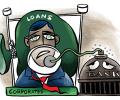
Bankers said they are looking outside the bankruptcy courts and will be able to resolve a few debts in the power sector before January-end.

Among the bank groups, under the baseline scenario, public sector banks' gross NPA ratios may increase to 13.2 per cent by September 2020 from 12.7 per cent in September 2019.
According to ICRA, even in a high-growth scenario, wherein the second half of FY20 sees the incremental bank credit rise to Rs 6.5-7 trn, there will still be a 40-45% year-on-year decline.
 © 2026 Rediff.com - Advertise with us - Disclaimer - Privacy Policy - Sitemap - Feedback - About us - Terms of use - Grievances